
Cancer is one of the most expensive illnesses a family can face. ICMR estimated over 14 lakh new cancer cases in India in 2023. So it is worth knowing exactly how health insurance for cancer patients works, both before and after a diagnosis.
This guide covers what normal plans pay, the special plans for people already diagnosed, and the lump-sum covers that protect your income.
Quick answer
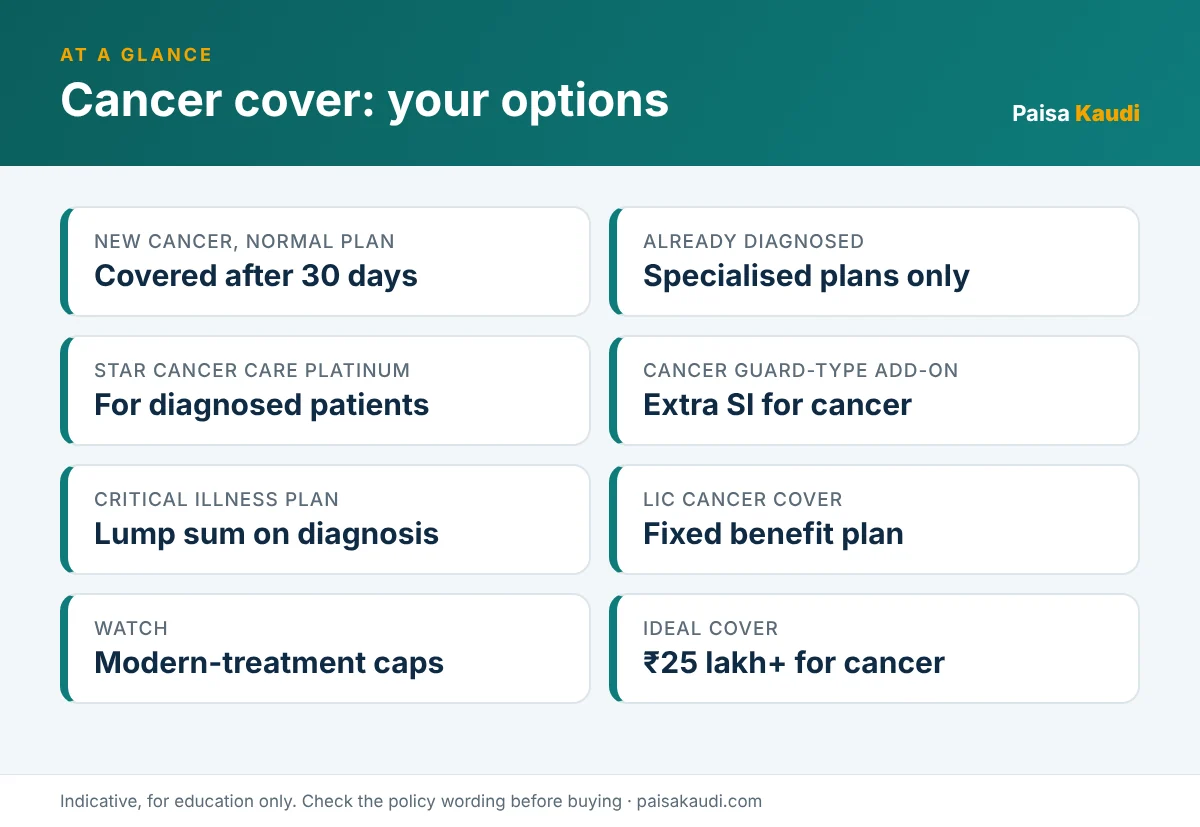
- Healthy today? A normal plan covers new cancer after 30 days. Buy high cover.
- Already diagnosed? Star Cancer Care Platinum is the main retail option.
- Add a critical illness or cancer lump sum for non-medical costs.
- Check caps on modern treatments like immunotherapy and oral chemo.
List of Topic Covered
Why cancer cover needs extra thought
Cancer treatment often involves surgery, many chemotherapy cycles, radiation and costly targeted drugs. As a result, bills can stretch over months and exceed ₹10–30 lakh. In addition, the patient or caregiver may lose income during treatment.
So the best protection combines a high hospital cover with a lump sum that pays for everything else.
How normal plans cover cancer
- Covered after the 30-day initial wait, if the cancer was not present before you bought the policy.
- Chemotherapy and radiation are generally paid as day-care procedures.
- Modern treatments such as immunotherapy and oral chemo are covered, but some budget plans cap them. For example, PRUHealth Protect caps modern treatments at ₹1 lakh.
- Restoration helps when one cancer year needs more than one sum insured.
Health insurance for cancer patients already diagnosed
| Option | What it does | Watch out |
|---|---|---|
| Star Cancer Care Platinum | Built for people diagnosed with cancer; covers cancer treatment and other illnesses | Lower cover, higher premium; read waiting rules |
| Employer group policy | Often covers pre-existing illness from day one | Ends when you leave the job |
| Government schemes | PM-JAY and state schemes cover cancer for eligible families | Eligibility rules apply |
Cancer add-ons and lump-sum plans
| Product | How it pays | Example |
|---|---|---|
| Cancer add-on on a health plan | Extra sum insured for cancer | Prudential’s Cancer Guard (see PRUHealth Protect) |
| Critical illness plan | Lump sum on diagnosis of listed illnesses | See critical illness insurance |
| Cancer-only fixed benefit plan | Pays fixed amounts by cancer stage | LIC Cancer Cover (Plan 908) |
How much cover do you need for cancer?
For a metro family, ₹25 lakh or more of total health cover is a safer target where cancer runs in the family. You can reach this cheaply with a ₹10 lakh base plus a super top-up. Then add a ₹10–25 lakh critical illness lump sum for income protection.
Steps to buy cancer protection
- Buy before any diagnosis. Cover is far easier and cheaper while healthy.
- Check modern treatment limits. Avoid plans with low caps.
- Choose unlimited restoration. Cancer often needs repeat admissions.
- Add a lump sum. Critical illness or cancer cover.
- Keep records. Screening reports help at claim time.
Myths vs facts about health insurance for cancer patients
| Myth | Fact |
|---|---|
| ❌ Cancer is excluded from health insurance. | ✅ New cancer is covered after the 30-day initial wait. |
| ❌ Chemotherapy is not paid because I go home the same day. | ✅ Chemo is covered as a day-care procedure. |
| ❌ Immunotherapy is never covered. | ✅ Modern treatments are covered, though some budget plans cap them. |
| ❌ A survivor can never buy insurance again. | ✅ Some insurers accept survivors after a gap, often with a loading or exclusion. |
Share this table with your family group. Most claim surprises start with one of these myths.
Real cost of cancer and how to fill the gap
Cancer bills often run across a year. For example, a family may face surgery, six chemo cycles, radiation and follow-up scans. Business Standard has reported that treatment can cost ₹30–40 lakh in some cases. So a ₹5 lakh plan alone rarely suffices.
The simplest fix is layering. First, keep a base plan of ₹10 lakh. Then add a super top-up of ₹25–50 lakh, which is inexpensive. Finally, add a critical illness lump sum for income and travel costs.
Health insurance for cancer patients: buying checklist
- No cap on modern treatments such as immunotherapy and oral chemo.
- Unlimited restoration, including for the same illness.
- High pre and post hospital cover, ideally 90 and 180 days.
- A large cashless network with cancer hospitals near you.
- Second opinion benefit for major treatment decisions.
Conclusion: health insurance for cancer patients
Health insurance for cancer patients works best when bought early. A strong base plan with no modern-treatment cap, plus a lump-sum cover, protects both treatment and income. If you are already diagnosed, explore Star Cancer Care Platinum and group cover. Also read which diseases are covered when.
FAQs on health insurance for cancer patients
Is cancer covered in health insurance?
Yes. New cancer is covered after the 30-day initial waiting period, up to your sum insured, if it was not present before purchase.
Can a cancer patient buy health insurance?
Yes, through specialised plans like Star Cancer Care Platinum, employer group policies or government schemes. Most regular plans decline during active treatment.
Is chemotherapy covered in health insurance?
Yes. Chemotherapy and radiation are generally covered as day-care procedures.
What is the difference between cancer insurance and health insurance?
Health insurance pays hospital bills. Cancer and critical illness plans pay a lump sum or fixed benefit on diagnosis, which you can use for any expense.
Has cancer affected someone you know? Share your question in the comments below and I will reply.
Disclaimer: This article is for education only and is not insurance advice. Features, premiums and waiting periods are taken from public brochures, prospectus summaries and IRDAI data as of the update date. They can change. Always read the policy wording and prospectus before you buy. Paisa Kaudi is not an insurance intermediary.